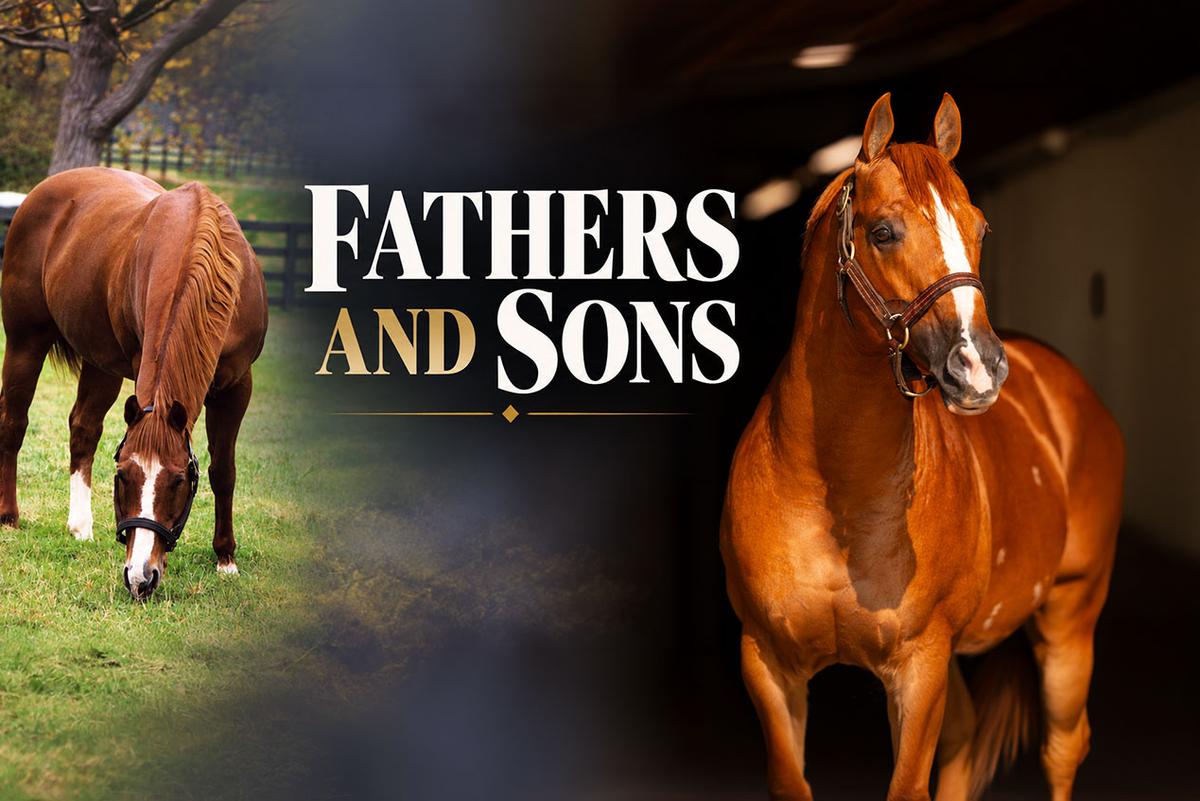
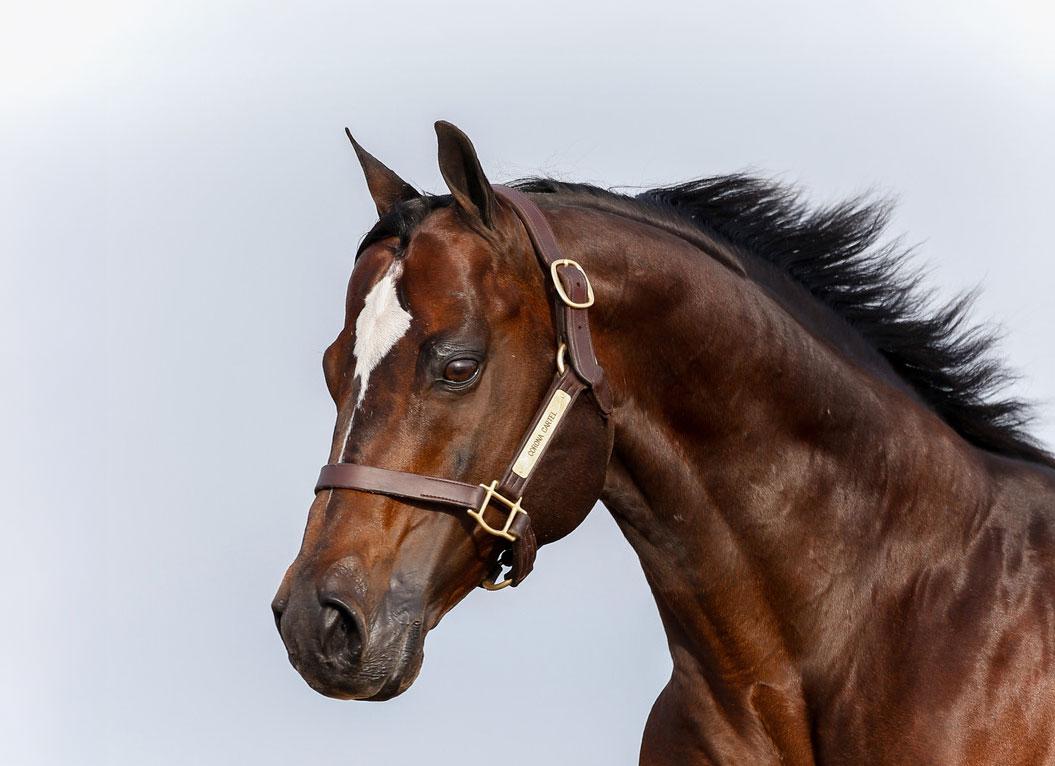
Nearly seven years after his death, Corona Cartel SI 97 continues to shape the future of American Quarter Horse racing. The legendary son of Holland Ease, who died December 18, 2019, at age 25, established a breeding dynasty that extends well beyond his own $73.8 million in progeny earnings, producing successful stallion sons, influential broodmares, and a growing collection of descendants competing at the highest levels of the sport.
Currently ranked as the No. 3 All-Time Leading Quarter Horse Sire of Money Earners, Corona Cartel has sired 1,281 winners from 1,906 starters, including 205 stakes winners, with total progeny earnings of $73,883,957 through October 26, 2026.
Only legendary First Down Dash ($90,944,787) and Apollitical Jess ($89,859,911) rank ahead of him on the all-time earnings list.
But those numbers tell only part of Corona Cartel's story.
Much like First Down Dash, whose influence extends through multiple generations of successful breeding stallions, Corona Cartel established himself as one of the industry's most important sires of sires, with five direct sons among the 50 all-time leading sires of money earners.
His influence also extends into a third generation through Freighttrain B, a son of PYC Paint Your Wagon who ranks among the industry's most successful breeding stallions.
Five Sons Among the All-Time Top 50
Corona Cartel's ability to transmit racing ability through successive generations is perhaps his most significant contribution to the breed.
Five of his sons have earned positions among the 50 all-time leading Quarter Horse sires, collectively accounting for more than $140 million in progeny earnings.
Leading that group is PYC Paint Your Wagon, ranked sixth all-time with $44,774,756 in progeny earnings. The 2003 stallion has sired 893 winners from 1,371 starters, including 132 stakes winners.
A Grade 1 winner of the Texas Classic Futurity, Texas Classic Derby and Heritage Place Derby during his racing career, PYC Paint Your Wagon has become one of the breed's most influential stallions in his own right.
His son Freighttrain B, currently ranked 16th all-time with $32,060,928 in progeny earnings, provides a compelling example of the Corona Cartel dynasty extending into a third generation.
Freighttrain B has sired 585 winners and 57 stakes winners, including Grade 1 All American Futurity winner Whistle Stop Cafe ($2,335,831).
Another prominent Corona Cartel son, Big Daddy Cartel, ranks 14th all-time with $32,809,308 in progeny earnings.
Standing at MJ Farms in New Mexico, Big Daddy Cartel has become a cornerstone of the state's breeding industry, producing 495 winners and 54 stakes winners from 842 starters. His leading earner is Bigg Daddy ($753,768).
Ivory James, a full brother to PYC Paint Your Wagon, ranks 22nd all-time with $27,378,045 in progeny earnings, 685 winners, and 64 stakes winners. His leading earner is Instygator ($1,608,801).
Two additional sons, Carters Cartel and Coronas Leaving You, occupy the 40th and 41st positions on the all-time list.
Carters Cartel has sired 472 winners and 49 stakes winners, with progeny earnings of $17,764,888. His leading earner is San Lorenzeaux ($617,360).
Coronas Leaving You has produced 386 winners and 33 stakes winners, with earnings of $17,591,954. His leading earner is San Lorenzo ($1,010,662).
Together, these five sons have sired 332 stakes winners and accumulated more than $140.3 million in progeny earnings.
Those earnings represent nearly twice Corona Cartel's own lifetime progeny earnings, illustrating the remarkable expansion of his bloodline through succeeding generations.
Including Freighttrain B, the six stallions account for more than $172.3 million in progeny earnings. These figures are separate sire records and should not be interpreted as unduplicated family totals.
Another Generation of Stallions Is Emerging
Corona Cartel's legacy is not limited to sons already established among the all-time leaders.
Several younger stallions and other successful sons are extending his influence through breeding programs across the country.
Among the most recognizable are Uncle D SI 96 and KVN Corona SI 95, both multiple AQHA Racing Champions whose breeding careers offer additional opportunities for the Corona Cartel line to expand.
Uncle D, a son of Corona Cartel out of Little Surfer by First Down Dash, earned $689,165 during his racing career.
The champion two-year-old and champion two-year-old colt won the Grade 1 Rainbow Futurity and finished second in the Grade 1 Heritage Place Futurity.
KVN Corona, out of Executive Looks by Executive Menace, earned $868,077 while winning 10 races.
Named AQHA Racing Champion Two-year-old Colt and Champion Three-year-old Colt, KVN Corona captured the Grade 1 Ed Burke Million Futurity, Grade 2 PCQHRA Breeders' Futurity and Grade 3 El Primero Del Ano Derby.
Other sons contributing to the family's breeding influence include Teller Cartel, Five Bar Cartel, Coronado Cartel and Docs Best Card.
Teller Cartel SI 108 earned $1,212,471 and was named AQHA Racing Champion Two-year-old Colt after winning the Grade 1 All American Futurity.
Five Bar Cartel SI 91, an AQHA Racing Champion Two-year-old Colt, earned $1,068,825 and captured the Grade 1 Ed Burke Million Futurity.
Docs Best Card SI 91 earned $784,318 while finishing second in three major Grade 1 futurities: the Los Alamitos Two Million, Golden State Million and Ed Burke Million.
These stallions illustrate the depth of Corona Cartel's male line beyond the five sons already established among the all-time leading sires.
Their continued contributions could ultimately add to an already remarkable breeding dynasty.
An Equally Important Legacy as a Broodmare Sire
While Corona Cartel's success as a sire of sires has attracted considerable attention, his influence through his daughters may prove equally significant. In fact, his daughter Remember Me Rose is the No. 1 All-Time Leading Quarter Horse Dam of Money Earners, further demonstrating the remarkable reach of his breeding dynasty.
Corona Cartel currently ranks as the No. 3 All-Time Leading Quarter Horse Broodmare Sire of Money Earners, with his daughters producing 2,461 winners from 3,933 starters and accumulating $119,968,557 in earnings.
Even more impressive, he is the No. 1 Leading Broodmare Sire of Money Earners in 2026. Through October 26, his daughters have produced 175 winners from 457 starters this year, earning $6,385,812.
Leading his remarkable collection of producing daughters is Remember Me Rose SI 110, the 2004 daughter of Corona Cartel out of Im Moonlighting by Zevi.
According to AQHA's All-Time Leading Dams of Money Earners rankings updated October 26, Remember Me Rose occupies the No. 1 position with $7,282,676 in progeny earnings, more than $2.4 million ahead of second-ranked Crazy Down Corona ($4,833,466).
Remember Me Rose has produced 31 winners from 41 starters, including 10 stakes winners. Her leading money earner is Cyber Attack ($1,721,346).
A successful race mare herself, Remember Me Rose earned $820,895 while winning nine races, including the Grade 1 Ruidoso Derby, Grade 2 AQHA Juvenile Challenge Championship and Grade 2 Sunland Park Winter Futurity. She was subsequently recognized as an AQHA Dam of Distinction.
Another Corona Cartel daughter, Attack The Cartel, ranks 27th among the all-time leading money-producing dams with $2,606,535 in progeny earnings.
Foaled in 2009, Attack The Cartel has produced 15 winners from 22 starters, including four stakes winners. Her leading money earner is Trane Station V ($1,754,152).
Together, Remember Me Rose and Attack The Cartel have produced 46 winners and 14 stakes winners, with combined progeny earnings of $9,889,211.
Having two daughters among the 50 all-time leading money-producing dams, including the No. 1 mare in the rankings, adds another dimension to Corona Cartel's standing as one of the breed's most influential foundation sires.
His daughters continue to contribute racing ability, speed and class to subsequent generations through a wide variety of stallion crosses.
The combination of five sons among the 50 all-time leading sires, two daughters among the 50 all-time leading money-producing dams, and his current position atop the 2026 broodmare sire standings illustrates the extraordinary breadth of Corona Cartel's genetic influence.
Few stallions have established such a powerful legacy through both their sons and daughters, ensuring that Corona Cartel's influence will continue to shape Quarter Horse racing for generations to come.
A Champion-Producing Stallion
Corona Cartel's accomplishments as a direct sire remain extraordinary.
Through 26 crops to race, his offspring include 10 AQHA Racing Champions and 205 stakes winners, according to the supplied lifetime statistics.
His leading money earner, Blues Girl Too SI 105, earned $2,032,328 while establishing herself as one of the outstanding racing mares of her generation.
The daughter of Run the Dash by Sixarun was named AQHA Racing World Champion, Champion Two-year-old, Champion Three-year-old, Champion Two-year-old Filly and Champion Three-year-old Filly.
Her major victories included the Grade 1 Los Alamitos Two Million Futurity, Champion of Champions, Golden State Derby and Mildred N. Vessels Memorial Handicap.
Other notable Corona Cartel runners include Teller Cartel ($1,212,471), Eye For Corona ($1,100,121), Five Bar Cartel ($1,068,825), Chazaq ($963,664), I Like The Odds ($911,606), PYC Paint Your Wagon ($889,581), KVN Corona ($868,077), and Remember Me Rose ($820,895).
His lifetime statistical summary also credits him with 1,636 Registers of Merit, 69 Superior Race Awards, and 31 Grade 1 stakes winners.
His ability to sire elite performers across numerous racing seasons provided the foundation for his subsequent success as a breeding influence.
The First Down Dash Connection
Corona Cartel's pedigree places him squarely within one of Quarter Horse racing's most influential sire lines.
Foaled in 1994, he was a son of Holland Ease SI 109, a Grade 1-winning son of First Down Dash.
That makes Corona Cartel a paternal grandson of First Down Dash, the breed's all-time leading sire of money earners.
Holland Ease earned $361,227 during his racing career, winning the Grade 1 Golden State Derby. He subsequently sired 43 stakes winners and progeny earners of more than $12.2 million.
Although Holland Ease established a successful breeding record of his own, Corona Cartel ultimately carried the family to another level.
Through Corona Cartel's sons and grandsons, the First Down Dash male line continues to influence major racing and breeding programs throughout North America.
The Extraordinary Corona Chick Female Family
Corona Cartel also inherited an exceptional maternal pedigree.
His dam, Corona Chick SI 113, by Chicks Beduino, was one of the outstanding racing fillies of her generation.
She won 15 of 18 starts and earned $591,326 while capturing AQHA Racing Champion Two-year-old, Champion Two-year-old Filly and Champion Three-year-old Filly honors.
Her major victories included the Grade 1 Ed Burke Memorial Futurity, Dash For Cash Futurity, Kindergarten Futurity and Governor's Cup Derby.
Corona Chick was subsequently recognized as an AQHA Broodmare of the Year and Dam of Distinction.
In addition to Corona Cartel, she produced several important runners and breeding prospects.
Among them was Corona Cash SI 101, a daughter of First Down Dash who earned $1,542,880 and won the Grade 1 All American Futurity.
Corona Cartel's maternal half-brother Valiant Hero SI 105, also by First Down Dash, became another highly successful breeding stallion.
Valiant Hero ranks 13th on the all-time leading sires list, with $33,306,443 in progeny earnings, including 68 stakes winners.
Other maternal half-brothers who entered stud include Captain Courage, Corona Czech and Mighty Corona.
The combination of First Down Dash's paternal influence and Corona Chick's exceptional female family helped establish the genetic foundation for Corona Cartel's remarkable breeding career.
His Breeding Influence Continues Beyond His Lifetime
Although Corona Cartel died December 18, 2019, his influence on the Quarter Horse breeding industry continues through frozen semen and advances in reproductive technology.
The legendary stallion was humanely euthanized at age 25 because of age-related infirmities and was laid to rest at Lazy E Ranch in Guthrie, Oklahoma, where he had stood throughout his breeding career.
At the time of his death, Corona Cartel's offspring had earned approximately $62.8 million. By October 26, 2026, that figure had climbed to $73,883,957, an increase of approximately $11.1 million since his death.
Today, breeders can still access Corona Cartel's genetics through frozen semen and intracytoplasmic sperm injection (ICSI), a reproductive procedure that allows fertilization using a single sperm cell.
For the 2027 breeding season, Corona Cartel's advertised fee is $20,000, with frozen and ICSI semen available through Lazy E Ranch and participating reproductive facilities.
He is advertised with the Oklahoma-Bred, Fuego Stallion Incentive, Black Gold and Speedhorse programs.
Breeding inquiries may be directed to Lazy E Ranch, 9601 Lazy E Drive, Guthrie, Oklahoma 73044, at (405) 282-3437, or by email at ranchinfo@lazye.com.
The continued availability of his genetics nearly seven years after his death provides breeders with an opportunity to produce additional offspring by one of the most influential sires in Quarter Horse racing history.
It also helps explain why Corona Cartel remains an active presence in annual sire rankings and the commercial yearling market despite having died in 2019.
Still Commanding Attention in the Sales Ring
Despite having died nearly seven years ago, Corona Cartel continues to demonstrate remarkable commercial appeal.
According to 2026 yearling sales statistics updated October 20, 24 Corona Cartel yearlings have sold for a combined $1,222,500.
They averaged $50,938, with a median price of $33,500.
Those figures underscore the continuing demand for his offspring among buyers seeking access to a bloodline with an established record of producing major stakes performers.
His 2026 racing statistics also reflect continued activity. Through October 26, Corona Cartel ranks 29th among the year's leading sires of money earners, with 33 winners and $996,469 in progeny earnings.
Few stallions have maintained such extraordinary influence years after their deaths, continuing to contribute as direct sires, sires of sires, broodmare sires and commercial breeding influences.
From Racing Champion to Foundation Sire
Before beginning his breeding career, Corona Cartel established himself as one of the outstanding juveniles of his generation.
Racing primarily at two, he won five of 10 starts during his freshman season and earned $544,435.
His victories included the Grade 1 Los Alamitos Million Futurity, Grade 2 Kindergarten Futurity and Tiny's Gay Handicap.
He completed his racing career with six wins, three seconds and earnings of $557,142 from 14 starts.
What followed, however, would ultimately overshadow his accomplishments on the racetrack.
Over 26 crops to race, Corona Cartel evolved from a Grade 1-winning juvenile into one of the most influential breeding stallions in Quarter Horse racing history.
A Dynasty That Continues to Grow
The measure of a truly influential stallion extends beyond the number of winners he produces or the earnings accumulated by his immediate offspring.
It is also reflected in whether his descendants can reproduce that success in subsequent generations.
Corona Cartel has demonstrated that ability through five sons among the 50 all-time leading sires, a successful grandson in Freighttrain B, additional younger sons developing their own breeding records and daughters responsible for nearly $120 million in earnings.
His standing as the third all-time leading sire and third all-time leading broodmare sire, combined with his No. 1 broodmare sire ranking for 2026, places him among the breed's most versatile and enduring genetic influences.
First Down Dash established one of the greatest sire lines in Quarter Horse racing history. Through his grandson Corona Cartel, that legacy developed into a distinct and increasingly powerful dynasty of its own.
And with younger generations still emerging and his frozen genetics available to breeders, Corona Cartel's ultimate influence on the breed may be far from fully measured.
* * * * * * * * * * * * *
Stay ahead of the Quarter Horse racing industry with the latest stakes results, breeding news, sales coverage, and industry developments. Sign up for the FREE StallioneSearch.com newsletter.